
Zimbabwe’s gold sector is once again confronting a familiar and dangerous pattern: the use of intimidation and narrative pressure as substitutes for lawful process. Recent public statements have attempted to reframe a stabilised, compliant artisanal mining operation as a problem requiring “intervention.”
That framing is misleading and it obscures a far more serious issue about how power is being exercised in the mining industry.
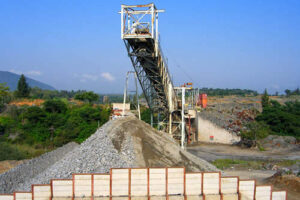
At the centre of this dispute is Botha Gold Mine, a duly registered local operator that, over several years, converted what was once a volatile makorokoza hotspot into a structured, regularised and productive artisanal mining environment. This did not happen by force or fiat. It happened through administration, compliance and sustained engagement with miners and contractors.
The results are measurable and difficult to dismiss: reduced criminality and violence, orderly artisanal activity, predictable livelihoods, improved safety and a degree of community stability rare in historically chaotic gold belts. These are outcomes the state routinely says it wants.
Yet instead of these gains being recognised, they are being cast as suspicious.
What should alarm policymakers and the public alike is not the existence of a dispute those are inevitable in mining but the manner in which it is being pursued. Rather than relying on regulatory channels or judicial determination, the approach adopted by Freda Rebecca Gold Mine has leaned heavily on pressure tactics: public notices and messages that induce panic before any lawful finding; shifting claims of authority that create confusion; repeated suggestions of criminal consequence without charge or hearing; and, most troublingly, the intimidation of third-party contractors and small operators who have no ownership dispute, no regulatory breach and no decision-making power.
This is not governance. It is coercion by proxy.
When institutional power is deployed to destabilise rather than resolve, the human cost is immediate. Contractors who invested in lawful operations face sudden uncertainty. Artisanal miners who had found stability under a structured system are pushed back into anxiety and insecurity. Women and other vulnerable participants are dragged into conflicting narratives they neither authored nor control.
Livelihoods, in this context, become leverage.
Particularly cynical is the invocation of empowerment language especially around women’s participation within an environment marked by pressure and implied threat. Empowerment is not a slogan; it is a condition. It must be voluntary, informed and protective. When empowerment rhetoric is paired with intimidation and confusion, it ceases to empower and instead functions as a smokescreen for destabilisation.
Order should not be punished.
It is deeply ironic that a model which reduced disorder and criminality is now portrayed as illegitimate. Formalisation and regularisation are explicit national objectives, embedded in Zimbabwe Vision 2030. Structured artisanal mining, reduced violence and inclusive economic participation are not deviations from policy; they are its core.
By stabilising a previously dangerous mining zone, Botha Gold Mine has advanced not undermined these goals. To dismantle such a model through pressure rather than process is to send a damaging signal: that compliance is a liability and that order invites attack.
The principle at stake is simple but foundational. Disputes in the mining sector must be resolved through law, evidence and due process not through intimidation, narrative dominance or the targeting of innocent third parties. No court has found wrongdoing on the part of Botha Gold Mine. Until competent authorities do so, lawful operations that deliver safety, livelihoods and stability should not be disrupted by pressure tactics masquerading as oversight.
If stability can be bullied aside without legal finding, then compliance itself becomes unsafe. That is not a future consistent with the rule of law or with Zimbabwe’s development ambitions.
Order must be protected, not punished.