
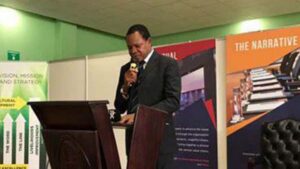
Ruvarashe Mariga.
Harare – The Ministry of Lands, Agriculture, fisheries, water and Rural Development and the National Action Committee on water, sanitation and hygiene announced that Harare will witness an improved water supply by the year 2026.
This initiative comes after, recent reports of the inability of the City of Harare to supply sufficient water to its residents due to supply challenges at Lake Chivero.
The crisis forced many people to resort to alternative water sources, such as buying bottled water and collecting water from nearby rivers and streams.
The government of Zimbabwe has stepped in to address the situation. The government stated that it would purchase a month’s supply of water treatment chemicals for the immediate relief of residents.
The relevant ministry aims to increase treated water production capacity from the current 303 Megalitres per day [ML/day] to 500ML/ day.
‘’Under the Presidential borehole drilling program, 303 boreholes have been sunk in Ruwa, Epworth, Chitungwiza, Harare and Norton” said Minister Dr Anxious Masuka.
The ministry has dedicated to accelerating borehole drilling in needy areas and the program will be coordinated by the Ministry of State for Provincial Affairs and Devolution and the Zimbabwe National Water Authority.
Moreover, the government is building the Kunzi-musami Greater Harare water supply system, with phase one being the construction of Kunzvi Dam and treatment Works to supply 202Ml per day.
Masuka said the system is expected to be operational by 2026.
The water crisis in Harare has been an ongoing issue since 2008. The lack of access to clean water has a devastating effect on the health and well-being of people as this has led to cholera outbreaks and typhoid.
The water crisis Is caused by ageing infrastructure, insufficient funding for water treatment and delivery, the effects of climate change and pervasive government corruption and mismanagement.
The infrastructure for piped water in Harare was developed in the 1950s, before Zimbabwe’s independence in 1980, and designed for a population of 300,000 people. Currently, Harare’s greater metropolitan area has about 4.5 million people, more than half of whom have no access to clean water.
The Ministry stated that only two water systems are providing raw water to the City of Harare, the Seke-Harava System and the Lake Chivero system. The intake at Lake Manyame is currently down, hence no water is being abstracted from the source.
Additionally, no new investments have taken place to argue that the demand and sewerage systems have been dilapidated.
‘’We are revamping the Muchekeranwa-Wemimbi-Marondera-Nora-Ruwa system which will supply 30ML/day. This will provide relief to Ruwa, Mabvuku and Tafara suburbs,’’ said Masuka