

By Staff Reporter
In the hills of Penhalonga, where stability has gradually returned after years of disruption linked to illegal mining, a new dispute has emerged between sections of the community, a mining operation, and civil society actors operating in the area.
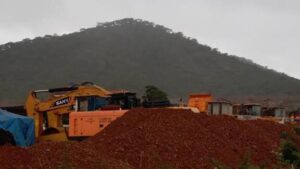
Toronto Mine, which residents credit with helping restore order following prolonged periods of environmental damage and criminal activity, has become the focus of criticism from some activists, even as many locals continue to express support for its presence.
Community members recall that before the resumption of formal mining operations, the area was plagued by uncontrolled panning, crime and social instability.
“Illegal miners destroyed roads and polluted our water sources,” said one long-time resident.
“There were frequent thefts and assaults. Things only changed after police operations and the return of formal mining.”
Toronto Mine was first registered in 1973 under multinational firm Lonrho. According to residents, joint operations between mine management and law enforcement led to the arrest of more than 20 illegal miners during a period of heightened insecurity, contributing to the restoration of calm.
Despite this, civil society groups, including the Centre for Natural Resources Governance (CNRG), have raised concerns about the mine’s operations and broader governance issues within the community.
However, some residents and traditional leaders argue that the activism has taken on a political character, alleging that community structures promoted by NGOs are being used to mobilise opposition against the ruling Zanu PF party and the mining operation itself.
“They came with a ready-made structure and leadership positions,” said a village head.
“To us, it felt less like community consultation and more like political organising.”
CNRG director Farai Maguwu has previously been vocal on issues of mining governance, including campaigns related to diamond mining in Marange and other mineral projects. Supporters of his work say such advocacy promotes accountability and environmental protection, while critics argue it undermines investment and empowerment initiatives.
In Toronto, concerns have been raised over the scale of a newly formed residents’ association, which includes several specialised committees uncommon in small settlements.
“For a community of this size, the structure is unusually complex,” said a former association member who later stepped down.
“It raised questions about its real purpose.”
Church leaders in the area echoed similar sentiments, calling for community platforms to remain focused on social welfare rather than political confrontation.
“At community level, people want peace, jobs and services,” said one pastor.
“Anything that divides residents along political lines creates tension.”
Some residents also questioned why NGO activity intensified after illegal mining had been curtailed.
“When we were struggling with crime and violence, we did not see this level of attention,” said an elderly resident.
“Now that there is order, the focus has shifted to confrontation.”
A senior Zanu PF official in Manicaland confirmed he had been approached to participate in the residents’ association but declined after attending initial meetings.
“I felt uncomfortable with the direction the discussions were taking,” he said, adding that community platforms should remain non-partisan.
Others who initially joined the association say they later withdrew after perceiving political undertones.
“We were told it was about development,” said a young mother.
“But later the discussions became political, which made some of us uncomfortable.”
At the same time, many residents continue to credit the mine with providing employment and restoring stability. A former illegal miner now employed at the site said formal work had offered an alternative to criminal activity.
“I now earn a living legally,” he said.
“There is safety and predictability.”
Women traders and local business operators also reported improved conditions since the reduction of illegal mining activities, citing better security and consistent trade.
Traditional leaders say cooperation between authorities and the mine played a role in dismantling criminal syndicates that had destabilised the area, though they stress the need for continued dialogue to address grievances.
Meanwhile, government officials in Manicaland have expressed concern over rising tensions, urging all parties to engage constructively and avoid politicising community structures.
For residents, the priority remains stability.
“We want development, peace and jobs,” said one elderly woman.
“Whatever happens, the community should not be turned into a battleground for politics.”