

By Staff Reporter
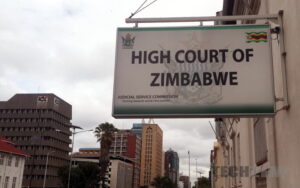
Harare — The High Court has struck off the roll an Urgent Chamber Application filed by Freda Rebecca Gold Mine against Side Electrical (Pvt) Ltd T/A Botha Gold Mine, delivering a significant legal setback to Freda Rebecca’s attempts to interdict Botha’s mining operations.
The matter, brought under case number HCH456/26, sought interdictory and declaratory relief premised on allegations that Botha Gold Mine had encroached onto Freda Rebecca’s mining area and that individuals and entities were carrying out alleged “illegal mining activities” within a disputed area Freda termed Mining Lease 21 (ML21).
Freda further alleged that Botha itself was conducting unlawful mining operations within this disputed zone.
However, after robust opposition by Botha Gold Mine, the High Court struck the application off the roll; a procedural outcome that underscores the court’s refusal to entertain the matter on an urgent basis.
Business Continues as Usual at Botha Gold Mine
Following the ruling, Botha Gold Mine has confirmed that operations continue as normal, with mining activities, contractor engagements and site management proceeding uninterrupted. Management has reassured contractors and workers that their contracts, access to shafts, and ongoing operations remain valid and protected, pending resolution of the dispute through lawful and appropriate channels.
The ruling provides immediate relief to employees and contractors who had faced uncertainty following weeks of heightened threats, public allegations and pressure associated with the failed urgent application.
A Pattern of Pressure, Not Proof
Legal observers note that the failed application forms part of a broader pattern in which claims of “illegal mining” have been advanced through public notices, threats of arrest and urgent court filings, often without first resolving fundamental issues of boundary demarcation, title clarity or regulatory process.
In recent weeks, contractors and third-party operators linked to Botha Gold Mine reported heightened intimidation, coercion and pressure to “regularise” under alternative arrangements, despite existing contracts and long-standing operational structures. These actions, critics argue, amount to victimisation of lawful operators rather than enforcement grounded in due process.
The High Court’s decision to strike the matter off the roll sends a clear signal: urgency cannot be manufactured through intimidation, nor can disputed factual claims be laundered through emergency court procedures.
Corporate Governance Questions Resurface
The outcome also revives unresolved corporate governance concerns surrounding Freda Rebecca’s approach to the dispute. Analysts have previously flagged inconsistencies between internal representations and external actions, including:
* The absence of transparent, verifiable boundary adjudication prior to escalating enforcement rhetoric
* The deployment of urgent litigation alongside public accusations of criminality
* Attempts to characterise a structured, operating mine as a collection of “illegal miners” despite evidence of organised contracts, compliance systems and site controls
Such conduct raises questions about whether governance safeguards, particularly around risk management, stakeholder engagement and legal escalation, were properly observed before reputationally damaging claims were advanced.
Courtroom Reality vs Public Narrative
While the public narrative accompanying the application portrayed an imminent threat requiring urgent judicial intervention, the courtroom outcome tells a different story. By striking the matter off the roll, the court declined to validate the urgency or the framing advanced by the applicant.
For Botha Gold Mine, the ruling represents not only a legal victory but also a measure of protection for its contractors and workforce, many of whom have faced uncertainty and fear amid escalating threats and allegations.
For now, the High Court’s decision stands as a reminder that courts are not instruments for commercial intimidation and that disputes of this magnitude must be resolved through governance, evidence and law, not urgency manufactured through fear.