
By Talkmore Gandiwa
HARARE – Zimbabwe’s inflationary momentum significantly accelerated in April 2026, with the USD month-on-month rate rising to 1.1%, gaining 0.6 percentage points from March’s 0.5%, as escalating geopolitical tensions in Iran triggered a fresh surge in global fuel prices, feeding directly into domestic cost structures and ending the short-lived stability observed in the first quarter.
For the month of April 2026, increases in the index were mainly observed in the Transport division, followed by the Food and Non-Alcoholic Beverages category, underscoring the dominant role of fuel in shaping price movements across the economy. The transport-led inflation spike reflects a classic cost-push dynamic, where rising fuel prices rapidly transmit through supply chains, increasing the cost of moving goods and services.
Annual inflation climbed to 2.2% in April, gaining 0.9 percentage points from 1.3% recorded in March, while the weighted year-on-year inflation rate, as measured by the all-items Weighted Consumer Price Index (CPI), rose to 2.8%, up from 2.0% in the previous month. The increase highlights a broadening inflation base, with pressures no longer confined to isolated sectors but spreading across the consumption basket.
Despite the uptick, the central bank maintains that it is implementing measures to contain inflation within a single-digit range, even as external shocks particularly fuel continue to exert upward pressure. However, the persistence of imported inflation is complicating policy transmission, especially in a dual-currency environment where USD pricing increasingly anchors market expectations.
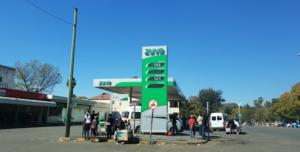
The imported inflation shock was amplified by regulatory adjustments, with the Zimbabwe Energy Regulatory Authority raising fuel pump prices twice in quick succession to US$2.19 per litre. This has significantly increased the cost of basic commodities and elevated the overall cost of doing business, offsetting government efforts to cushion consumers through tax reductions on fuel.
According to the latest data released by Zimbabwe National Statistics Agency, the all-items USD CPI increased by an average rate of 1.1% between March and April 2026. “The USD month-on-month inflation rate for April 2026 was 1.1%, gaining 0.6 percentage points on the March 2026 rate of 0.5%,” the agency said, confirming a decisive upward shift in monthly price dynamics.
A deeper decomposition of the data shows that USD food inflation rose modestly to 0.8% from 0.7%, indicating a gradual return of food price pressures after a relatively stable period. In contrast, non-food inflation surged to 1.2% from 0.4%, highlighting the disproportionate impact of fuel on services, logistics, and utility-linked costs.
Economic analyst Farai Mutambanengwe said the April spike signals the re-emergence of fuel as the primary inflation driver, warning that sustained increases in energy prices could entrench inflationary pressures in the medium term. “Fuel acts as a universal input cost. If the upward trend persists, we are likely to see second-round effects becoming more pronounced, particularly in non-food inflation and services,” he noted.
Mutambanengwe added that continued volatility in global oil markets could weaken the effectiveness of domestic monetary policy. “Even with tight monetary controls, imported inflation especially through fuel can override local stabilisation efforts, forcing businesses to continuously adjust prices to protect margins,” he said.
Additional indicators also point to rising cost pressures, with the USD Building Materials Price Index (BMPI) recording a quarterly increase of 3.7% in March 2026, up from 1.1% in December 2025, reflecting growing construction and infrastructure costs linked to imported inputs and transport expenses.
Meanwhile, the Food Poverty Line (FPL) for one person stood at ZWG 909.72 in April 2026, while the Total Consumption Poverty Line (TCPL) reached ZWG 1,329.07, underscoring the mounting pressure on household incomes as inflation erodes purchasing power.
With fuel prices remaining the central risk factor, businesses and consumers should brace for sustained price adjustments in the short term, particularly if geopolitical tensions persist, reinforcing the inflationary cycle through transport, utilities, and broader service sectors