
Pride Mzarabani
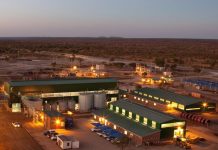
HARARE — Tharisa Plc is finalising a US$75 million local working-capital facility for its Karo Platinum project in Zimbabwe, reinforcing balance sheet liquidity as construction advances toward first ore production in the fourth quarter of calendar 2027.
The facility complements a US$300 million senior secured bond raised to fund Karo’s remaining construction programme. Proceeds from the oversubscribed bond, which drew institutional demand across Europe, the United Kingdom, North America, the Middle East, and Asia, are currently held in escrow pending standard condition precedents.
Tharisa expects project drawdowns to commence in November 2026, according to its fourth-quarter production report for the financial year ended September 2026.To date, Tharisa has deployed US$240 million toward Karo’s total estimated capital expenditure requirement of US$516 million. That spend comprises US$204 million in company equity and US$36 million from the Karo bond.
Tharisa chief executive Phoevos Pouroulis noted that a pivotal three-week window in August and September firmly anchored Karo’s investment thesis by locking in mining tenure, offtake commitments, and long-term funding.
On August 24, Tharisa signed a 25-year Special Mining Lease Agreement with the Government of Zimbabwe covering 23,903 hectares of the Great Dyke, securing regulatory stability and fiscal terms for the asset’s lifespan. Three days later, the miner sealed a five-year platinum group metals concentrate offtake agreement with Valterra Platinum, followed by the successful US$300 million bond issuance on September 24.
Pouroulis emphasised that combining long-term tenure, legal certainty, and guaranteed offtake created the precise profile required to draw international institutional capital to a major African greenfield project.
On-site development maintained strong momentum through the September quarter. Pre-stripping reached 1.91 million bank cubic metres (BCM) as excavation transitioned from soft weathered material into hard overburden.
The mining contractor has deployed 44 of its planned 82 fleet units, stripping 785,000 BCM across July and August. Fresh ore mining begins in October 2026 to supply feed for ongoing metallurgical test work.Structural works have moved beyond bulk earthmoving into fabrication and steel erection.
Mechanical installation is slated for the first quarter of 2027, followed by electrical and instrumentation packages in the second quarter. Cleaner flotation installation has hit 73 percent completion, while the Chirundazi Dam wall stands at 75 percent.
Mid-September saw the arrival of the substation, thickener, and clarifier components, supported by an operational on-site bonded warehouse.The project remains on track for commissioning between July and October 2027, with first ore to the mill targeted for late 2027.
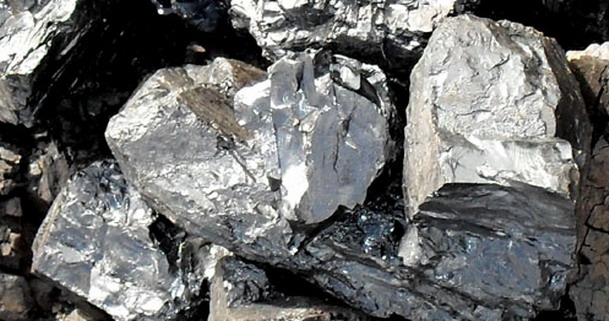
Karo expects to reach steady-state annual output of 220,000 to 230,000 ounces of 6E PGMs approximately six months after processing begins. Operational safety remained unblemished throughout the period, with zero lost-time injuries recorded across 3.66 million injury-free hours in FY2026.
Across its broader operations, Tharisa delivered full-year PGM production of 153,700 6E ounces, up from 138,700 ounces in FY2025 and within guided ranges, aided by fourth-quarter output rising to 41,000 ounces. The group’s realized basket price climbed to US$2,607 an ounce for FY2026, compared with US$1,615 an ounce in FY2025, though quarterly pricing eased slightly to US$2,535 an ounce.
Chrome concentrate production totaled 1.564 million tonnes, matching expectations, with full-year metallurgical-grade prices averaging US$290 a tonne on a 42 percent basis compared to US$266 a tonne previously.
Development at the Tharisa Underground transition project also progressed within budget, clocking 450 metres advanced and 52,000 tonnes mined.
Tharisa closed September with US$123.6 million in cash and US$288.2 million in escrow, yielding total liquidity reserves of US$411.8 million against US$462.8 million in gross debt.
This positioned the company in a net debt stance of US$51 million, shifting from net cash of US$10.7 million in June. The quarterly capital movement reflected US$30.4 million in Karo expenditure, US$19.6 million allocated to the underground transition, and US$12.4 million in bond issue discounts, fees, and accrued interest.
Looking ahead to FY2027, Tharisa guided group production between 150,000 and 170,000 ounces of PGMs and 1.50 million to 1.65 million tonnes of chrome concentrate.