

Staff Reporter
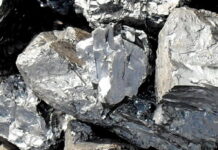
HARARE – Mutapa Energy Resources (MER) says its Sandawana Mine has recorded a JORC-certified lithium resource of 39.9 million tonnes, with nearly three-quarters of the resource classified as measured, a milestone the company says strengthens the project’s bankability and positions it for future investment.
Speaking during the announcement of the mine’s JORC-compliant mineral resource estimate, MER Chief Executive Officer Innocent Rukweza said the certified resource covers only Block A, which represents about 30 percent of Sandawana’s 3,800-hectare mining claims.
“The results we are are announcing today relate only to Block A, which constitutes 30 percent of the entire mining claim. The remaining 70 percent, covering Blocks B and C, has not yet been explored,” Rukweza said.
He said the certification confirmed 39.9 million tonnes of lithium-bearing ore, with 28.7 million tonnes, or 72 percent, classified as measured resources, making it one of the country’s most advanced lithium resource estimates.
“It is my singular honour to announce that, to the best of our knowledge, we are the first Zimbabwean mine with measured resources constituting 72 percent of the total resource. This means the resource has been confirmed by a competent person, is bankable and provides confidence to investors,” he said.
The JORC certification follows an intensive 11-month exploration programme involving 103,000 metres of drilling, analysis of 33,000 samples, and an exploration investment of US$24 million.
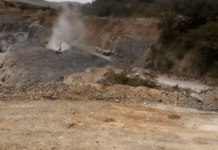
Rukweza said Sandawana has already mined 2 million tonnes of ore and has commenced work on a 3 million-tonne-per-year lithium concentrator plant.
Construction of supporting infrastructure is also underway, including roads and the relocation of 104 families, together with a school and clinic, to pave the way for mine expansion.
Meanwhile, exploration is continuing on Blocks B and C, which together account for 70 percent of the mining claims. The company is carrying out geophysical and geochemical surveys while also upgrading the resource estimate for parts of Block A.
Besides lithium, the resource also contains several associated minerals. Rukweza said tantalum and niobium are among the economically recoverable by-products identified, alongside lithium, while other trace elements occur in smaller quantities that are not currently considered commercially viable.
The announcement comes as Zimbabwe continues to push for increased value addition in its lithium sector, with major investments being directed toward processing infrastructure rather than the export of raw mineral concentrates.