
Itai Ndongwe
SANDAWANA – Mutapa Energy Resources expects its Sandawana lithium project to generate US$5 billion in revenue over six years once a US$300 million concentrator being built with a Chinese consortium comes on stream, even as the parliamentary mines committee rejected its call for tax relief.
Chief executive Innocent Rukwezha said the figure was a modelled outcome, not a target, and was based on lithium prices lower than those now on the market. It covers only the six-year build-operate-transfer (BOT) period for Block A. The mine has a 15-year life, so he expects total revenue to go well beyond that.
“So it’s not a target, it’s a model where we modelled the transaction that we had and we’re just simply saying based on the prices that we use, which were quite lower than the prices currently obtaining, we are going to register US$5 billion in a 6-year period,” Rukwezha said on the sidelines of a tour of the mine by the Parliamentary Portfolio Committee on Mines and Mining Development.
He said the model already allows for price swings, including a 46% fall in lithium prices since May.
BUILT, RUN, THEN HANDED BACK
Rukwezha said the US$300 million had been secured and the agreements signed early this year. Under the BOT deal, the consortium will build and run the 3 million tonne a year concentrator, then hand it to Mutapa at the end of the term. The company’s project timeline places the Tsingshan contract talks between 2023 and 2025, with construction running through 2026 and 2027, and a US$400 million lithium sulphate plant planned for 2027 to 2028.
The sulphate plant matters because the government has set January 2027 for a ban on lithium concentrate exports, and producers have had to commit to building sulphate plants to keep shipping in the meantime.
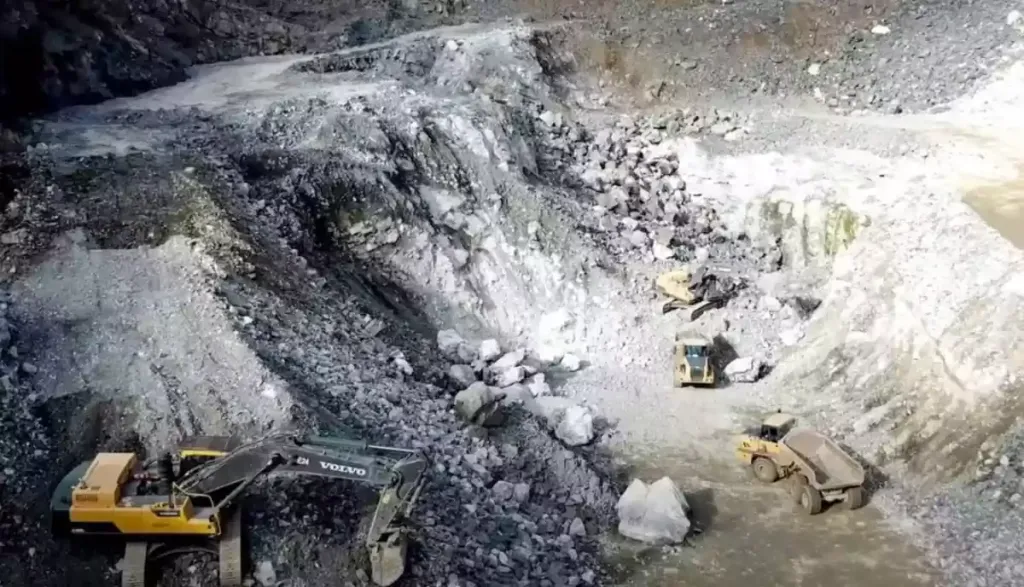
Mutapa, the mining and energy arm of the Mutapa Investment Fund, has cut back mining this year to prepare for the plant. It has mined about 900,000 tonnes so far this year, part of it toll-processed at the Gwanda lithium plant under a contract that has now ended, and is opening a larger pit to build stockpiles for the new concentrator. Since January 2023, the starter pit has produced 2.9 million tonnes of ore at a grade of 1.48% lithium oxide, and toll treatment of half of it yielded about 310,000 tonnes of concentrate.
Its presentation to lawmakers showed year-to-date revenue of US$113.3 million and net profit of US$98.3 million, an 87% margin, against audited F25 revenue of US$8.8 million and a US$10.1 million loss.
NO APPETITE FOR TAX CUTS
Mutapa listed seven measures it says would help the lithium sector compete, among them easing the export tax, export quotas and processes, more time on the beneficiation plan, reliable power and closer engagement with government.
Committee chairman Remigeo Matangira dismissed calls by miners for tax relief, saying Parliament backed current government policy. He said no businessman ever admits to making money, and asked why mountains should be taken down if the country did not tax them. It would be refreshing, he said, to hear miners propose raising the tax from 7% to 9%, adding that there had been little beneficiation since 2018 and 2019.
He said the committee’s visit was to understand the operation, not to audit its finances.