

SANDAWANA,- Mutapa Energy Resources expects to generate US$5 billion in revenue over six years from its Sandawana lithium project following a US$300 million joint venture with a Chinese consortium to construct a 3 million tonnes per annum (Mtpa) lithium concentrator plant.
The projection is based on a financial model under a Build-Operate-Transfer (BoT) arrangement for Block A, rather than a company revenue target, chief executive Innocent Rukwezha told The Anchor on the sidelines of a Parliamentary Portfolio Committee on Mines and Mining Development tour of the mine.
Rukwezha said the model uses conservative lithium prices below current market levels and factors in price volatility, expressing confidence that the project would deliver the projected revenue despite fluctuations in the global lithium market.
“So it’s not a target, it’s a model where we modelled the transaction that we had and we’re just simply saying based on the prices that we use, which were quite lower than the prices currently obtaining, we are going to register US$5 billion in a six-year period,” he said.
He said the projection covers only the six-year BoT period, while the mine has an estimated life of 15 years, potentially pushing total revenues beyond US$5 billion.
The US$300 million facility has been secured, with agreements signed earlier this year. Under the arrangement, the Chinese consortium will finance, construct and operate the concentrator before transferring it to Mutapa at the end of the agreement.
The development marks a major step in the company’s plans to expand local lithium processing capacity and increase value addition at Sandawana.
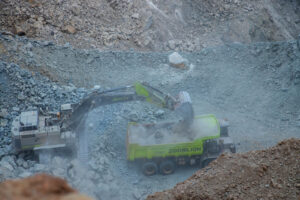
According to the company’s presentation to lawmakers, Sandawana has mined approximately 2.9 million tonnes of ore from its starter pit since January 2023, at an average lithium oxide grade of 1.48%.
The hard-rock open-pit operation, which predominantly exploits spodumene-bearing pegmatite, has produced approximately 310,000 tonnes of lithium concentrate through toll treatment of half of the mined material.
Mining activities have been scaled down this year as the company prepares for the new processing facility. About 900,000 tonnes of ore had been mined year-to-date, with part of the material sent to a lithium plant in Gwanda for toll processing under a contract that has since ended.
The company is now developing a super pit and building stockpiles to ensure sufficient feed for the planned 3 Mtpa concentrator.
Mutapa’s development programme also includes a proposed US$400 million lithium sulphate plant between 2027 and 2028, following construction of the concentrator scheduled for 2026 to 2027.
The company plans to spend US$16 million upgrading Block A’s resource estimates, alongside US$1 million in geotechnical exploration in Blocks B and C.
Financially, Mutapa reported a sharp improvement in performance, with its presentation showing FY2026 year-to-date estimated revenue of US$113.3 million and net profit of US$98.3 million, representing net profit and EBITDA margins of 87% and 88%, respectively.
Its full-year FY2026 unaudited figures showed revenue of US$73.8 million and net profit of US$58.7 million, compared with audited FY2025 revenue of US$8.8 million and a US$10.1 million loss. In FY2024, the company recorded revenue of US$38.6 million and profit of US$4 million.
However, the company’s expansion ambitions come amid calls for changes to the mining fiscal and regulatory framework, with Mutapa identifying the 16% export tax, export quotas, lengthy export procedures and unreliable electricity supply among the challenges affecting the competitiveness of the lithium sector.
The company called for easing of the export tax, streamlined export processes, an extension of the beneficiation plan, reliable power supply and greater government support.
But Chairman of the Parliamentary Portfolio Committee on Mines and Mining Development, Remigio Matangira, dismissed calls by mining companies for tax reductions, saying Parliament supports the government’s existing policy framework.
He questioned why miners should seek tax relief while extracting the country’s mineral resources, arguing that the state must benefit from mining activities.
“No businessman admits to making money,” Matangira said, questioning why mountains should be excavated if the country was not going to collect taxes from mining companies.
He said it would be refreshing to hear mining companies propose increasing taxes from 7% to 9% instead of seeking reductions.
Matangira also questioned the limited progress in mineral beneficiation since 2018 and 2019, adding that the committee’s visit to Sandawana was intended to familiarise lawmakers with mining operations rather than audit the company’s finances.