
By Itai Ndongwe
HARARE – Government is set to build nine interchanges along the Joshua Mqabuko Nkomo Expressway in a major US$250 million upgrade aimed at easing traffic congestion and improving access to the airport.
The project will transform the busy road into Zimbabwe’s first high-capacity controlled-access highway linking Robert Gabriel Mugabe International Airport with Harare’s city centre.
Authorities say the development is expected to reduce travel time to the airport, improve road safety, and make traffic flow smoother along one of Harare’s busiest routes.
Local contractor Makomo Engineering is carrying out the works, while Ascon Africa is the consulting engineer.
Once complete, the expressway will operate as a modern dual carriageway designed to handle heavy traffic volumes from the city centre to the airport.
The works will include interchanges at major intersections such as Dieppe Road and Harare Drive to allow vehicles to move without stopping at traffic lights. The project will also include flyovers above railway lines, bridges across the Mukuvisi River, a viaduct over congested sections, improved drainage systems, street lighting, and landscaping.
At the airport, new traffic circles and wider access roads will connect motorists to the expanded passenger terminals.
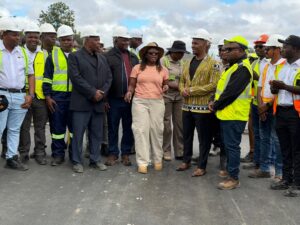
Transport and Infrastructural Development Minister Felix Mhona toured the Harare Drive interchange site on Monday, where land clearing and early construction works are already underway. He was accompanied by Permanent Secretary Engineer Joy Makumbe and other senior government officials.
Mhona said construction teams would soon move to all nine intersections, with the Harare Drive interchange expected to be completed before the end of the year.
“This is a project people have been waiting for over the years,” Mhona said.
“It will improve the movement of traffic and strengthen connectivity to Robert Gabriel Mugabe International Airport.”
He said the government adopted a private-sector loan financing model to avoid putting pressure on the national budget.
“We will be able to pay over time without putting too much strain on the fiscus,” he said.
The full project, including diversion roads, is expected to take about two and a half years to complete.