
By Talkmore Gandiwa
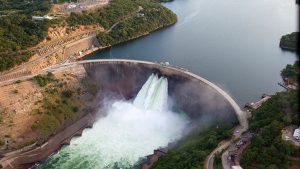
HARARE — The Zambezi River Authority has allocated 23 billion cubic metres (BCM) of water for power generation at the Kariba hydropower stations in 2027, down from the revised 36 BCM allocation for 2026, as forecasts of below-normal rainfall raise concerns over water availability in the coming season.
The allocation reflects expectations of strong El Niño conditions during the 2026/27 rainfall season, which could reduce inflows into Lake Kariba and constrain electricity generation in Zimbabwe and Zambia.
The Authority said its decision was informed by the regional climate outlook issued at the 33rd Southern African Regional Climate Outlook Forum (SARCOF-33), held in Swakopmund, Namibia, from August 25 to 28, 2026, as well as forecasts from the national meteorological agencies of both countries and its internal projections of water inflows.
The 23 BCM allocation will be shared equally between ZESCO Limited and the Zimbabwe Power Company (ZPC), with each utility receiving 11.5 BCM for operations at the Kariba North Bank and Kariba South Bank power stations, respectively.
Based on the planned utilisation, Lake Kariba is projected to close 2027 with a water level of 476.80 metres above sea level and 5.83 BCM of usable water remaining, equivalent to 9% of live storage.
The lower allocation underscores the potential pressure on hydropower generation as Zimbabwe and Zambia prepare for a rainfall season expected to bring reduced precipitation across much of the region.
The Authority, however, maintained its revised 2026 water allocation at 36 BCM, following an increase from the initial 30 BCM allocation after substantial inflows during the 2025/26 rainfall season improved water availability in Lake Kariba.
Under the revised allocation, ZESCO and ZPC each received 18 BCM for power generation.
As of October 14, 2026, ZESCO had 3.53 BCM remaining from its allocation, representing 19.66%, while ZPC had a balance of 6.13 BCM, equivalent to 34.09% of its allocation.
The Authority projects that Lake Kariba will close 2026 with 16.24 BCM of usable water, equivalent to 25.10% of live storage, which will be available at the beginning of 2027.
Water levels have improved significantly compared with the same period last year. As of October 14, 2026, Lake Kariba stood at 480.65 metres above sea level, with 23.77 BCM of usable water, representing 36.68% of usable storage capacity.
On the same date in 2025, the lake level stood at 477.34 metres, with usable water of 8.25 BCM, equivalent to 12.75% of usable storage capacity.
Despite the recovery, the forecast deterioration in rainfall conditions could limit further inflows and place pressure on the lake’s ability to sustain electricity generation through 2027.
The SARCOF-33 outlook, which covers October 2026 to March 2027, points to an increased likelihood of below-normal rainfall across much of the central and southern parts of the Southern African Development Community region.
The anticipated dry conditions are linked to El Niño developments in the tropical Pacific, which are expected to strengthen during the season.
For southern Zambia and much of Zimbabwe, below-normal rainfall is forecast during the early part of the season, with the dry conditions likely to extend across most areas of both countries between January and March 2027.
The rainfall outlook places additional importance on managing the available water resources carefully, given Kariba’s role in electricity generation for both countries.
The Authority said it continues to monitor water utilisation daily and coordinates with the two utilities through joint technical committee meetings to ensure compliance with approved allocations.
These arrangements are intended to support the management of water resources and enable timely responses to changing hydrological conditions.
The Authority said it would continue assessing water availability against its projections and communicate any operational decisions that may arise as the rainfall season progresses.