
Itai Ndongwe
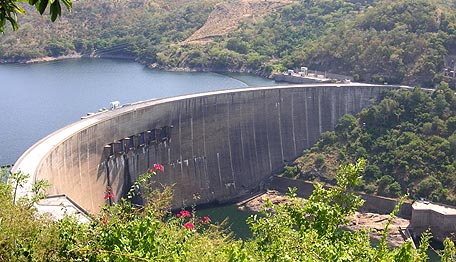
HARARE – The Zambezi River Authority has reduced the combined water allocation for electricity generation at Lake Kariba to 23 billion cubic metres for 2027, down sharply from 36 billion cubic metres in 2026, following forecasts of a potent El Niño weather pattern and suppressed rainfall across the region.
According to the authority’s Lake Kariba water management report and 2026/2027 hydrological outlook, the 2027 allocation will be split equally between Zambia’s ZESCO Limited and the Zimbabwe Power Company, providing each utility with 11.5 billion cubic metres.
The reduced allocation stems from climatic projections reviewed during the 33rd Southern African Regional Climate Outlook Forum held in late August 2026 in Swakopmund, Namibia. The regional forum, alongside downscaled assessments from the meteorological departments of Zambia and Zimbabwe and internal hydrological modeling by the authority, pointed toward an intensifying El Niño phase in the tropical Pacific.
Meteorological models indicate an increased likelihood of below-normal rainfall across southern and central southern Africa from October 2026 through March 2027. Southern Zambia and broad swathes of Zimbabwe face dry conditions early in the rainy season, with subdued precipitation expected to persist across both countries well into the first quarter of 2027.
Under the newly set water cap, Lake Kariba is projected to conclude 2027 at a water level of 476.80 metres above sea level, leaving 5.83 billion cubic metres of usable water, or roughly 9 percent of live storage capacity.
Meanwhile, the combined allocation for 2026 remains steady at 36 billion cubic metres, split evenly at 18 billion cubic metres per utility after an earlier upward revision from 30 billion cubic metres. That adjustment was made possible by healthy river inflows during the 2025/2026 rainy season, which meaningfully bolstered reservoir levels.
Recent measurements show that as of mid-October 2026, ZESCO’s Kariba North Bank Power Station had consumed most of its quota, holding a balance of 3.53 billion cubic metres, or just under 20 percent of its yearly limit. Across the border, ZPC’s Kariba South Bank Power Station retained 6.13 billion cubic metres, representing roughly 34 percent of its allotment.
Water levels at the reservoir remain substantially better than during the severe drought conditions recorded a year earlier. In mid-October 2026, the lake stood at 480.65 metres with 23.77 billion cubic metres of usable water, translating to nearly 37 percent of live storage. By comparison, on the same date in 2025, the lake level had dropped to 477.34 metres, leaving only 8.25 billion cubic metres of live water, or 12.75 percent capacity.
Hydrologists anticipate the reservoir will end December 2026 with roughly 16.24 billion cubic metres of usable water, or about 25 percent live storage, providing an opening buffer as the leaner 2027 regimen begins.
Acting Chief Executive Peter Kapinga emphasized that the authority remains mindful of Kariba’s central role in sustaining electricity generation and economic productivity in both Zambia and Zimbabwe. He affirmed that technical teams will conduct daily monitoring and hold regular joint committee sessions with both utilities to guarantee compliance, track incoming river flows, and adjust operations as seasonal conditions evolve.